Contact Us

I-70 Floyd Hill to Chief Hosa Resurfacing

Transportation

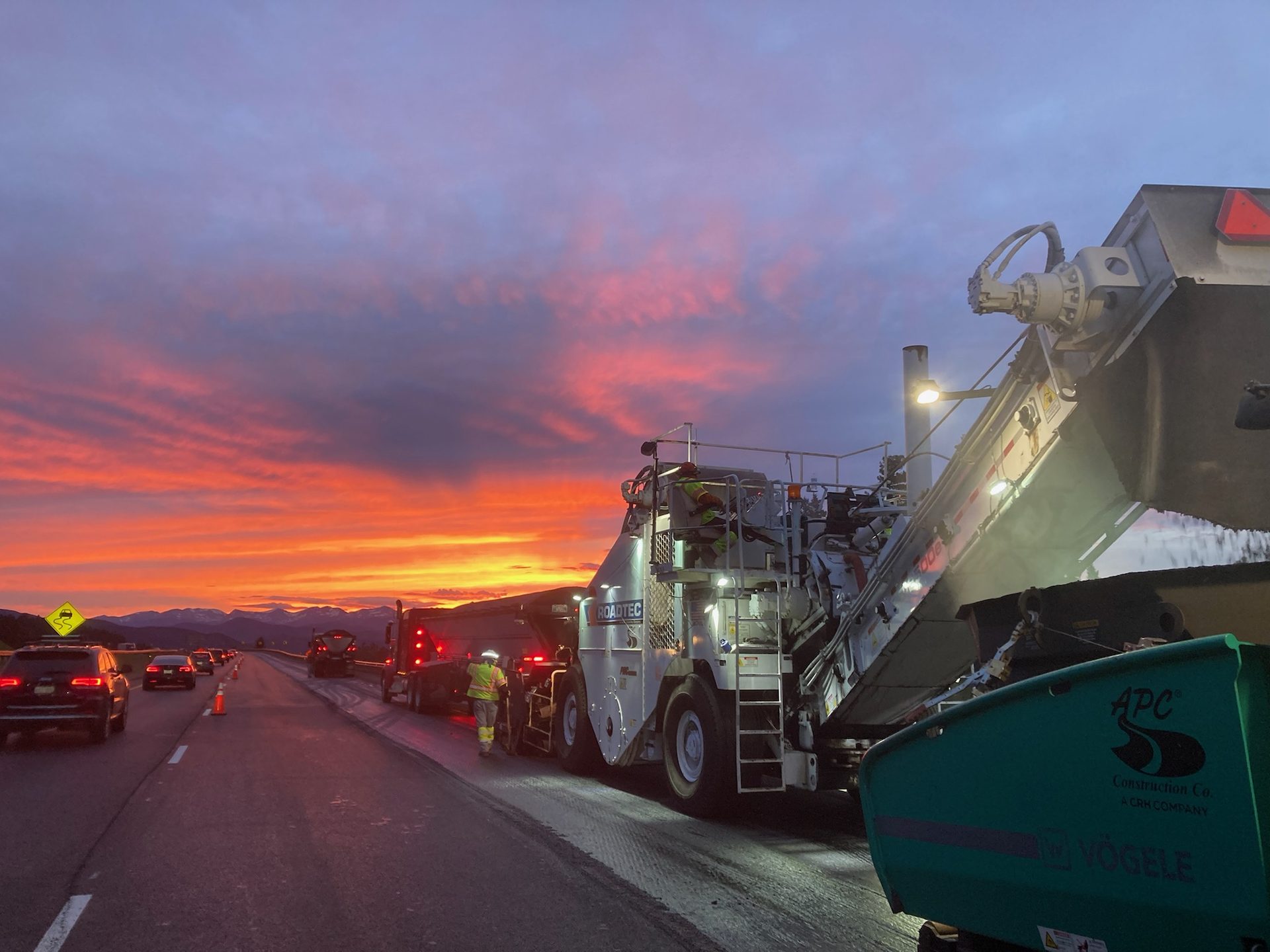
Owner acceptance testing and inspection through 6.4 miles of night SMA paving on Colorado's mountain corridor.

  • $12.8MMountain Corridor Investment
  • 6.4 MIOf I-70 Milled & Repaved
  • SMAStone Matrix Asphalt, Tested On Site

Repaving the gateway to the Rockies – without closing it.

Between Floyd Hill and Chief Hosa, I-70 climbs through the Front Range foothills carrying ski traffic, freight, and daily commuters in and out of the mountains — and its pavement had reached the end of its life. CDOT’s $12.8 million resurfacing project rehabilitated 6.4 miles of the interstate (MP 246.5–252.9) through Jefferson and Clear Creek Counties, milling off deteriorated pavement and repaving both directions in stone matrix asphalt (SMA) — the durable, rut-resistant surfacing CDOT reserves for its hardest-working corridors. With no practical detour around this stretch of the mountains, contractor APC Construction completed all paving in a single season, almost entirely under nighttime lane closures, then returned the following season for guardrail replacement, culvert cleaning, signage, and striping.

Working directly for CDOT, Vivid Engineering Group provided construction inspection, QA/QC administration, and field and laboratory owner acceptance materials testing across the project. SMA is one of the most demanding mixes to test — gap-graded, fiber-stabilized, and unforgiving on volumetrics — so Vivid ran the entire laboratory acceptance program from its on-site field lab, turning results while the mat was still going down. Vivid inspectors and certified technicians worked the night closures alongside the paving crews, verifying mix temperatures, compaction, and placement in real time; high-altitude paving windows, mountain weather, and live interstate traffic made every shift count, and Vivid’s team kept acceptance testing and documentation moving on the contractor’s schedule so the corridor reopened to full capacity every morning.

Project Details

  • Client

    Colorado Department of Transportation (CDOT)

  • Contractor

    APC Construction Co. – a CRH Company

  • Location

    I-70 Mountain Corridor, Floyd Hill to Chief Hosa (MP 246.5-252.9) – Jefferson & Clear Creek Counties, CO

  • Project Value

    $12.8 million

  • Timeline

    Construction April 2022 – May 2023

  • Sector

    Transportation

  • Services

    Construction Inspection & Testing

  • Transportation

    I-25 South Gap Project: Monument To Castle Rock

    I-25, Monument to Castle Rock, CO (18 miles)

    For years, the 18-mile stretch of I-25 between Monument and Castle Rock was the only four-lane section left between Denver and Colorado Springs — a congested, crash-prone bottleneck known simply as "the Gap." CDOT's $350 million I-25 South Gap Project, delivered through the CM/GC method with Kraemer North America, widened the interstate to three lanes in each direction with a new express lane, reconstructed five bridges, extended ramps, built five wildlife crossings to reduce animal-vehicle collisions, and placed a new pavement overlay along the full length of the corridor. Construction ran from 2018 through 2022.<br /> <br /> Partnering with Rocksol Consulting Group, Vivid Engineering provided owner's acceptance inspection and materials testing for CDOT on the project. Vivid inspectors and technicians covered drainage features, retaining walls, bridge structures — including caisson and bedrock observations at the new bridge foundations — and pavements, along with test pits and DCP testing to confirm subgrade conditions, verifying that the work met CDOT's standards on one of the most heavily traveled corridors in the state.
  • Transportation

    SH 7 Permanent Repairs Project

    CO 7, South St. Vrain Canyon, Lyons to Raymond (MP 19 to 33), Boulder County, CO

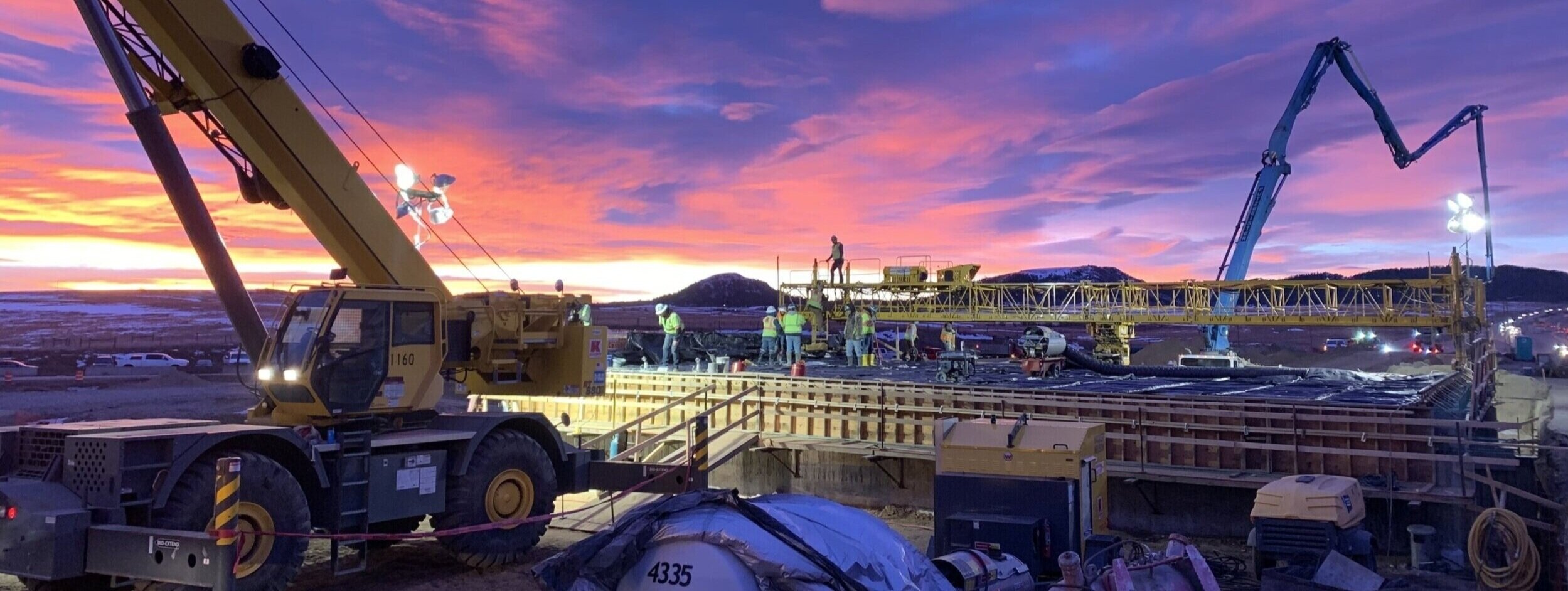
    The September 2013 flood devastated Colorado Highway 7 through the South St. Vrain Canyon, severely damaging or completely washing away nine miles of roadway and cutting off canyon access for two and a half months. Temporary repairs reopened the road, but a permanent fix had to wait. The SH 7 Permanent Repairs Project — the final permanent infrastructure project of Colorado's $750 million 2013 Flood Recovery Program, funded through FHWA Emergency Relief — permanently rebuilt 14 miles of the canyon between Lyons and Raymond. The $60 million project replaced temporary post-flood asphalt with a fully reconstructed roadway, restored 11,500 linear feet of St. Vrain Creek to a resilient natural channel, rebuilt embankments and drainage, added rockfall ditches and a four-foot uphill bicycle shoulder, and revegetated 28 acres of disturbed canyon — all while meeting a net-zero construction waste goal.<br /> <br /> Vivid Engineering Group worked alongside Kiewit Infrastructure Co. and CDOT Region 4 from September 2021 through November 2022, providing field and laboratory materials testing of soils, aggregates, concrete, and asphalt to verify that every material placed met CDOT standards — including the 38,500 tons of asphalt that make up the new canyon roadway. In a narrow canyon with a single access road and an active creek restoration underway, Vivid's technicians kept sampling and testing on the contractor's schedule so the corridor could reopen as planned.

  • Transportation

    Ridgegate Parkway Widening

    RidgeGate Parkway, I-25 to Meridian Village Parkway, Lone Tree, CO 80124

    RidgeGate Parkway is the spine of Lone Tree's fast-growing RidgeGate development, linking I-25 and the Lone Tree City Center to the neighborhoods east of the interstate. To keep pace with that growth, the RidgeGate Parkway Widening Project expanded the corridor between I-25 and Meridian Village Parkway to add two through-lanes in each direction, including a split-alignment section, new bridges over Badger Gulch and Happy Canyon Creek, 8-foot pedestrian sidewalks, and a 12-foot cycle track running the length of the project.<br /> <br /> Partnering with Hamilton, Vivid Engineering provided construction field and laboratory materials testing for soils, concrete, and asphalt throughout the project. Our technicians tested embankment and backfill compaction, structural concrete for the new bridges, and asphalt paving as the corridor was built out, verifying that every element met the project's quality standards and giving the contractor results on the schedule the work demanded.

Have a project with conditions like these?

Talk with the engineers and inspectors who work on projects just like this every day.